Pilot Point Horse Property Guide for Acreage Buyers
February 19, 2026
February 19, 2026
If your perfect weekend includes a quiet hack under big Texas sky and easy trailer access to Ray Roberts Lake, Pilot Point should be on your shortlist. Buying horse‑friendly acreage here takes more than a pretty view though. You need to understand where horses are allowed, what improvements you can build, and how the land will perform in real life. In this guide, you’ll learn the rules that matter, what to inspect on every property, ballpark budget factors, and local riding resources so you can move forward with confidence. Let’s dive in.
If a property sits inside the City of Pilot Point, the municipal code controls livestock. The code allows horses on tracts that meet zoning for agriculture or open space and are at least one acre. Review the city’s livestock rules before you make an offer by checking the relevant code section on horses and cattle allowed on one acre or larger tracts. You should also confirm the parcel’s zoning and any recent amendments in the city’s schedule of uses and fence rules.
Helpful links:
In unincorporated Denton County, county development rules apply. Many improvements count as development and typically require a permit. That includes barns, grading, drive construction, and fencing if work touches a floodplain. Plan to run your site plan by county Development Services early in due diligence so you know what is allowed and what it will take to permit. Start here: Denton County Development Services.
If the property uses a private well, confirm whether a local Groundwater Conservation District has registration or production rules. The North Texas Groundwater Conservation District is active in this region and provides guidance on well registration and permitting. Ask for the existing well’s log and a recent pump test, then verify the parcel’s well status with the district. Contact the district here: North Texas GCD.
Most acreage tracts outside city sewer rely on an on‑site sewage facility. In unincorporated Denton County, the Environmental Health Division handles permitting and approvals. Your inspector will evaluate soils, setbacks, and system type. If you are planning a new home or barn apartment, budget time for an OSSF site evaluation and permitting. Learn more at Denton County Environmental Health – OSSF.
A practical rule of thumb is 1 to 3 acres per mature horse, with the exact number depending on pasture quality and your management plan. Well‑managed coastal or bermuda pastures during the growing season can support closer to 1 to 1.5 acres per horse. A conservative plan is 2 to 3 acres per horse if you want grazing without heavy supplementation. Rotational grazing with multiple paddocks can improve recovery and extend your pasture’s carrying capacity. For a small hobby setup, 2 to 5 acres can support one or two horses with purchased hay. Larger herds or commercial operations typically need 10 acres or more and a different layout.
Reference: Extension guidance on fencing and planning for horses
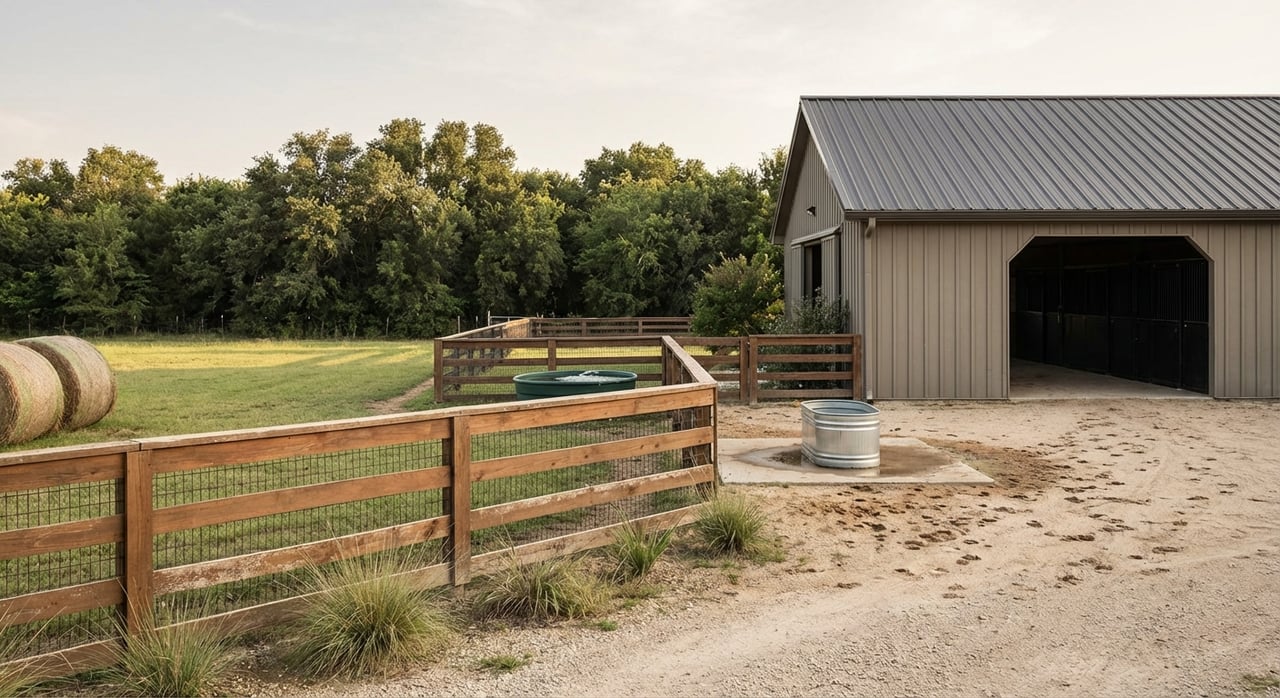
Safe, visible fencing protects both horses and your investment. Extension guidance recommends perimeter fences roughly 54 to 60 inches high for horses. Choose materials with good visibility, such as board, coated high‑tensile with visibility strips, vinyl rail, or safe rope systems. Avoid sharp edges and loose wires. While basic barbed wire is common on cattle properties, it is generally discouraged for horse containment due to injury risk. Inside Pilot Point city limits, confirm fence material allowances and permitting in the municipal code before you build or replace fencing.
If you want or need stalls, 12 by 12 feet is a common standard for many adult horses. Walk every barn with an eye for airflow, lighting, secure feed and tack storage, safe electrical, and clear egress. Look for a well‑drained pad around the barn and gates wide enough for equipment. A dedicated wash area and nearby sacrifice paddock or dry lot will help you manage mud and turnout during wet periods. More planning tips are covered in this horse facility planning resource.
An arena is only as good as its base and drainage. Inspect grade, water flow paths, footing depth and mix, and access for drags and water trucks. Poor drainage shortens usable days and leads to costly retrofits. Arena dimensions vary by discipline, so focus first on location, drainage, and base quality. These factors drive both daily usability and resale value. For background on planning and cost drivers, see Extension’s overview.
Divide pasture into multiple paddocks and rotate grazing so vegetation can recover. Build at least one sacrifice or all‑weather paddock near the barn to protect grass during wet weather. Place gates, waterers, and feeders where you can manage traffic and mud. Situate barns and primary paddocks on higher ground to encourage runoff to move away from structures.
Pilot Point sits near the Eastern Cross Timbers and Blackland Prairie transition, so soils can range from clay to sandy loams. Soil type affects pasture productivity, arena base performance, and septic suitability. Order a soils review and, if needed, a percolation or site evaluation during your option period. Historical county soil surveys can offer useful context for what to expect.
Parcels near Ray Roberts Lake and low‑lying creek corridors may have mapped flood zones. Before you commit to a build site, run FEMA flood maps and check Denton County’s GIS layers for floodplain and environmental constraints. Start with the county’s mapping portal: Denton County GIS and floodplain layers.
Confirm road frontage, driveway ownership, and any shared maintenance or HOA obligations. For horse use, plan gate placement and turning radius for your trailer. Think about emergency access for vets and farriers, plus the shortest hard‑surface path to your barn during rainy spells.
Every site is different, but these are common cost drivers:
Ongoing operations. Plan for hay and feed, farrier and veterinary care, fence repairs, arena drag and footing upkeep, manure management, pasture seed and fertilizer, and water and electric for the barn. If you choose to board while you ready the property, compare local boarding options by service level and turnout practices.
Ray Roberts Lake draws riders from across North Texas. The lake and the Greenbelt Corridor offer designated equestrian trail mileage and equestrian camps at Isle du Bois, Jordan Park, and several trailheads. Local volunteers help maintain routes and share updates. Learn more from the Lake Ray Roberts Equestrian Trails Association.
In and around Pilot Point, you’ll find a healthy equine community with options for lessons, training, and boarding. Examples include Black Mustang Ranch, Valor Farm, Wolfcamp Equine Center, Petschenig Show Jumping, and Lyndon Rife Dressage. If you are boarding, visit in person and ask about turnout schedules, vet and farrier relationships, and biosecurity. For context on one local provider, see Black Mustang Ranch’s story.
Use this simple path to vet a horse‑friendly property in and around Pilot Point:
When you pair the right acreage with smart planning, everyday horse care gets easier and the property holds its value. If you want a guide who speaks both land and lifestyle, and who has hands‑on experience developing raw acreage into functional ranch property, we’re here to help. Connect with Lesli Ray Etzel to talk goals, timelines, and a search plan tailored to your horses.
Stay up to date on the latest real estate trends.
August 27, 2026
August 20, 2026

August 13, 2026

August 6, 2026
August 6, 2026
July 23, 2026
July 16, 2026

July 9, 2026
July 2, 2026
Through her extensive experience, passion and skills in understanding and explaining the purchase or listing transaction, her negotiating skills and ability to stay calm and focused under pressure has proven to be invaluable.