Sherman TX Land Market Trends Buyers Should Watch
May 28, 2026
May 28, 2026
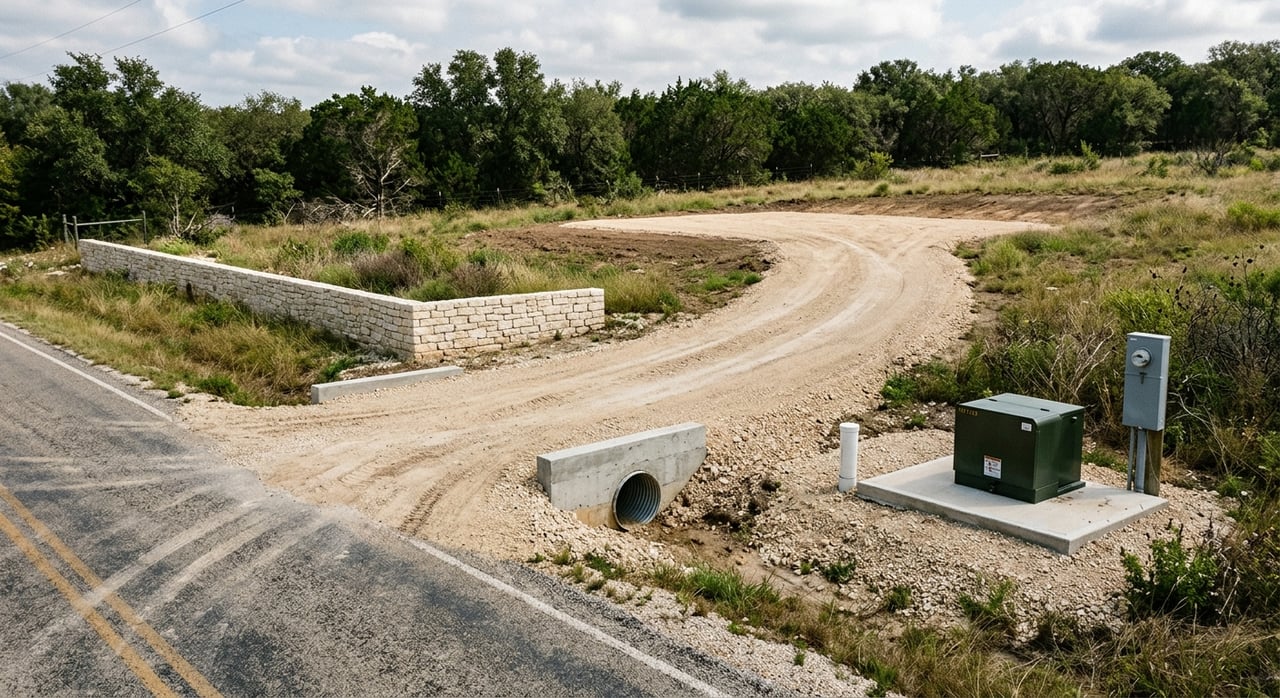
Big changes are reshaping land decisions in Sherman. If you are thinking about buying, selling, or holding acreage here, you are not looking at the same market that existed even a few years ago. Population growth, major manufacturing expansion, and city-led infrastructure planning are all influencing where buyers look and what kinds of parcels stand out. Let’s dive in.
Sherman is seeing strong growth from new residents moving into the area. HUD estimated the Sherman-Denison metro at 148,700 people as of December 1, 2023, with average annual growth of 2.6% since 2020, and said that growth came entirely from net in-migration. The City of Sherman’s 2024 ACFR lists the city at 44,052 residents, while the Census Bureau’s 2024 estimate for Grayson County is 150,532.
That kind of growth matters because land demand usually follows jobs, rooftops, and long-term infrastructure. Sherman also sits on US-75, which keeps it connected to major travel and business corridors. For buyers and sellers, that means land is increasingly being evaluated not just for what it is today, but for how it may fit into the city’s next chapter.
One of the biggest forces in Sherman’s land market is industrial expansion. HUD reported that manufacturing makes up 12% of nonfarm payroll jobs in the metro, and semiconductor and other electronic components manufacturing averaged about $146,400 in annual pay in 2022. Higher-paying jobs can support broader demand for housing, nearby development, and well-positioned acreage.
Texas Instruments and GlobalWafers have helped put Sherman on the radar in a major way. HUD said both companies were adding four phases to their wafer facilities and expected to add 3,200 and 1,500 permanent jobs at full build-out. Sherman’s 2024 ACFR also lists Texas Instruments among the city’s principal employers.
That momentum has continued. In June 2025, Texas Instruments said its U.S. manufacturing plan had exceeded $60 billion and that its Sherman mega-site could include four fabs and as many as 3,000 direct jobs. In December 2025, TI announced production had started at its newest Sherman fab, and in February 2026, Texas announced a semiconductor innovation fund grant for Coherent’s Sherman wafer project.
The most active areas are not random. The clearest overlap between city planning, infrastructure work, and current listing patterns appears along US-75, near the Texas Instruments and GlobalWafers technology corridor, around Shepherd Drive and Interurban Parkway in the southwest, near FM 1417 and the airport area, and on Highway 289 near North Texas Regional Airport.
These areas tend to attract attention because access, visibility, and future utility reach matter. In a changing land market, buyers often look for parcels that align with corridors where public investment and private development are already moving. Sellers with land in these paths may find that buyers ask more detailed questions about frontage, nearby improvements, and future land use.
Sherman is not growing without a roadmap. The city adopted its 2022 Comprehensive Plan on October 17, 2022, and the plan says it will guide growth for the next 10 years and beyond. That gives landowners and buyers a clearer framework for understanding where the city expects different kinds of growth to concentrate.
The Future Land Use Map does not create zoning, but it does show the city’s growth expectations. The plan identifies Regional Commercial along US-75, Technology Hub areas anchored north by the airport and south by TI, Core Neighborhood areas centered in east Sherman, and Agriculture/Rural areas generally in the ETJ.
That last category is especially important if you are looking at acreage outside the core of town. The city plan says Agriculture/Rural areas are not anticipated for development within ten years, typically lack adequate planned utilities, and are generally served by well water and on-site sewer until utilities extend farther out. In practical terms, that can affect cost, timing, and future resale strategy.
In Sherman, not all land carries the same utility story. Some parcels in more developed corridors have utility access at or near the street, while more rural tracts may depend on well water and on-site sewer for the foreseeable future. That difference can have a major effect on land use, development flexibility, and buyer interest.
City infrastructure work is a big part of why this matters now. Sherman’s major infrastructure program includes the 5 MGD North water treatment plant expansion, the 36-inch West Sherman water main from the plant to Shepherd Drive, the Shepherd 2 MG elevated storage tank in the southwest zone, Lake Texoma pump station expansion, Shepherd Drive improvements west from US-75, and work at the South wastewater treatment plant.
The city also says its water system uses both groundwater and surface water from Lake Texoma. Surface-water mains are mainly in the north and west, while groundwater mains are mainly in the east and central parts of town. Sherman also uses impact fees to help fund new road, water, and sewer infrastructure tied to growth.
For buyers, this means utility access should be part of your first round of questions, not an afterthought. For sellers, it means the utility picture of your parcel may be one of the strongest parts of the marketing story.
Current public listings show a land market with two clear sides. On one side, you have smaller urban and infill lots. On the other, you have larger tracts that may appeal to buyers thinking about development, long-term hold potential, or strategic location.
Land.com currently shows 200 Sherman land listings overall, including 73 up to 1 acre, 63 between 1 and 5 acres, 135 under 10 acres, and 57 over $1 million. Those categories overlap, but the snapshot still shows how broad the market has become.
Examples help illustrate that spread. Smaller listings include sites of 0.09, 0.17, 0.22, and 0.73 acres. More development-oriented listings include a 2.52-acre commercial site on US-75 with utilities at the street, an 11.63-acre tract on Friendship Road with utilities nearby, a 22.6-acre site at US 82 and Texas 289, a 68.5-acre tract on Old Ida Road, a 90.9-acre tract on Shepherd Drive with strong utility access, and a 209-acre Highway 289 tract across from North Texas Regional Airport with utilities on site.
One important shift is that smaller parcels appear to be playing a bigger role in the market. In Sherman’s current listing mix, the most visible clusters are under 1 acre and between 1 and 5 acres. That suggests demand is not limited to large ranch-style holdings or major development assemblies.
This lines up with a broader Texas trend. Texas A&M’s small rural land research says small land sales have become much more common, and the statewide median size in that dataset fell from 23.91 acres in 2012 to 17.59 acres in the most recent quarter in the report. Sherman’s inventory appears to reflect a local version of that same shift, even though large tracts are still available.
If you are a buyer, this means you may need to think more carefully about intended use, access, and utility readiness rather than assuming bigger is always better. If you are a seller, it may mean your parcel’s appeal depends less on raw acreage count and more on how usable and well-positioned it feels to the next buyer.
Today’s buyers are often looking past size alone. Frontage, visibility, access to major roads, nearby employers, and the parcel’s fit with future growth patterns are all becoming more important. In a market like Sherman, land with a clear story tends to stand out.
That story may involve proximity to a major corridor, utility availability, or alignment with the city’s future land use framework. A parcel that sits where infrastructure and employment growth are moving may attract different attention than isolated acreage with fewer services and less road exposure. Neither is automatically better, but they will likely appeal to different buyer goals.
For that reason, land searches in Sherman are becoming more strategic. Buyers are not just asking, “How many acres?” They are asking, “What can this tract realistically support, and how does this area look five to ten years from now?”
If you own land in Sherman, this evolving market creates both opportunity and pressure to position property correctly. Buyers are more likely to compare your tract against future growth corridors, utility reach, and transportation access. They may also look closely at whether your parcel feels like infill, transitional land, or longer-term rural hold property.
Parcels with frontage, visible access, and a future land use story that fits the city’s plan are likely to be easier to market than isolated raw acreage. That does not mean rural land lacks value. It means your pricing, presentation, and target buyer need to match the property’s real strengths.
This is where practical land experience matters. In a market that is changing quickly, it helps to evaluate not just what a property is worth on paper, but what questions the next buyer is likely to ask before making an offer.
Sherman’s land market is evolving from a simpler acreage market into a more layered one. Growth is being shaped by population gains, major manufacturing investment, a formal long-range city plan, and infrastructure expansion that is gradually changing how different parts of the area function.
That creates a market where location details matter more, utility access matters more, and corridor alignment matters more. It also creates room for different strategies, whether you are looking for a smaller tract with near-term usability or a larger parcel with long-term optionality.
If you want to make a smart move in Sherman, the key is to look beyond acreage totals and focus on context. In this market, the land story is often just as important as the land itself.
If you are weighing a purchase, planning a sale, or trying to understand how your acreage fits into Sherman’s growth path, working with someone who understands both land and development can make the process a lot clearer. Connect with Lesli Ray Etzel to talk through your property goals with a practical, Texas-grounded approach.
Stay up to date on the latest real estate trends.
August 27, 2026
August 20, 2026

August 13, 2026

August 6, 2026

August 6, 2026
July 23, 2026
July 16, 2026

July 9, 2026
July 2, 2026
Through her extensive experience, passion and skills in understanding and explaining the purchase or listing transaction, her negotiating skills and ability to stay calm and focused under pressure has proven to be invaluable.